
Where it lives
Tropical oceans, coral reefs and nesting beaches.
COMPLETE SPECIES PROFILE
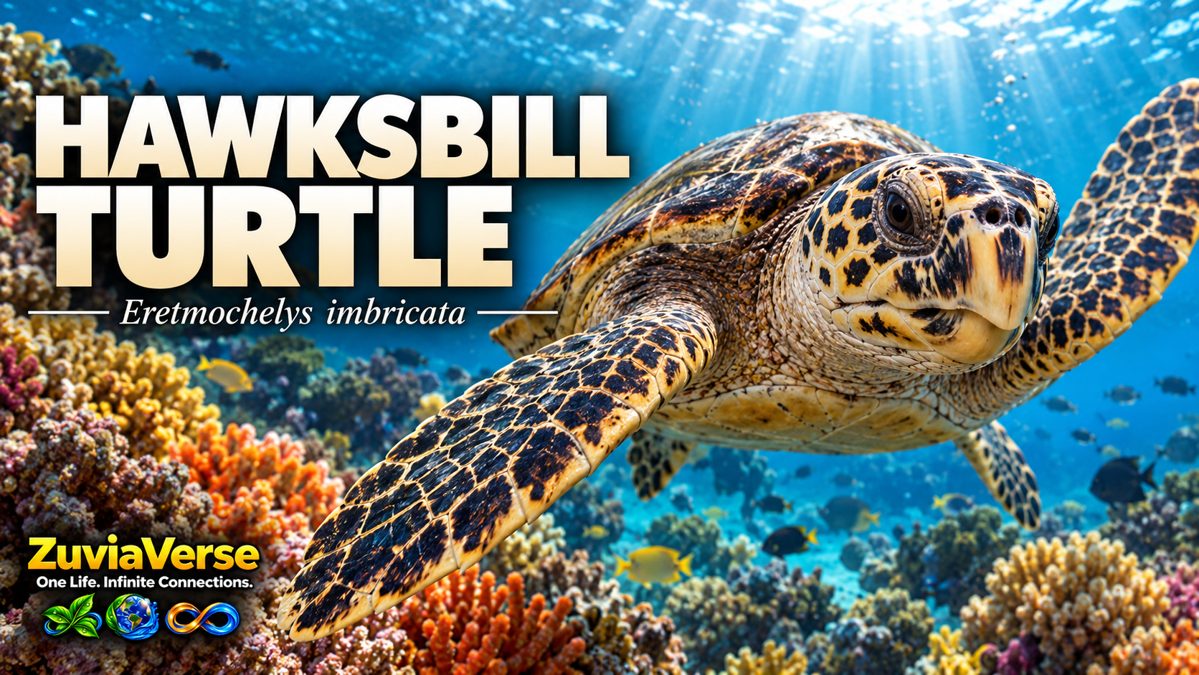
Eretmochelys imbricata
One species, many connections.
WHY IT MATTERS
Coral reefs and nesting beaches are connected parts of this turtle’s life cycle.
MEET THE SPECIES
Tropical oceans, coral reefs and nesting beaches.
Its narrow beak helps reach food in crevices; the shell protects its body.
Coral reefs and nesting beaches are connected parts of this turtle’s life cycle.
INTERACTIVE TAXONOMY
Select a rank to learn what the classification means.
DID YOU KNOW?
Its beak is curved and narrow.
It often feeds around coral reefs.
It moves between feeding areas and nesting beaches.
Its global conservation status is Critically Endangered.
Its narrow beak helps reach food in crevices; the shell protects its body.
Coral reefs and nesting beaches are connected parts of this turtle’s life cycle.
Habitat loss and human pressures make ecosystem protection important. Global conservation status requires a dated assessment before publication.
Educational overview based on the Chapter 1 production package (Document 27, v1.1, August 2026). Scientific facts and image rights require final review before publication.